
DPF cleaning that is
measured, not claimed.
A blocked DPF is not a consumable to be replaced: in the overwhelming majority of cases it is a filter that has simply run out of the ability to regenerate itself. Our off-vehicle process strips accumulated soot and, critically, the incombustible ash that active regeneration can never remove.
- From
- ₹6,500
- Flow restoration
- Up to 99%
- Turnaround
- Same day
- Warranty
- 12 months
Two things accumulate. Only one burns off.
Understanding the difference is the whole reason cleaning exists as a service, and the reason a filter that regenerates perfectly will still eventually need us.
Soot is combustible. When the exhaust reaches temperature, it burns away in the process called regeneration, and the filter clears itself. A vehicle that runs sustained highway journeys does this almost continuously without the driver ever noticing.
Ash does not burn. It comes from engine oil additives and normal internal wear, and it accumulates permanently over the life of the filter. No amount of regeneration, motorway driving or additive will remove it. It can only be extracted physically, which is what an off-vehicle clean does.
A filter therefore blocks for one of two reasons: regeneration has stopped working, so soot is building faster than it clears; or the substrate has simply filled with ash over years of service. Measuring the filter on the bench establishes which, because the correct action for each is completely different.
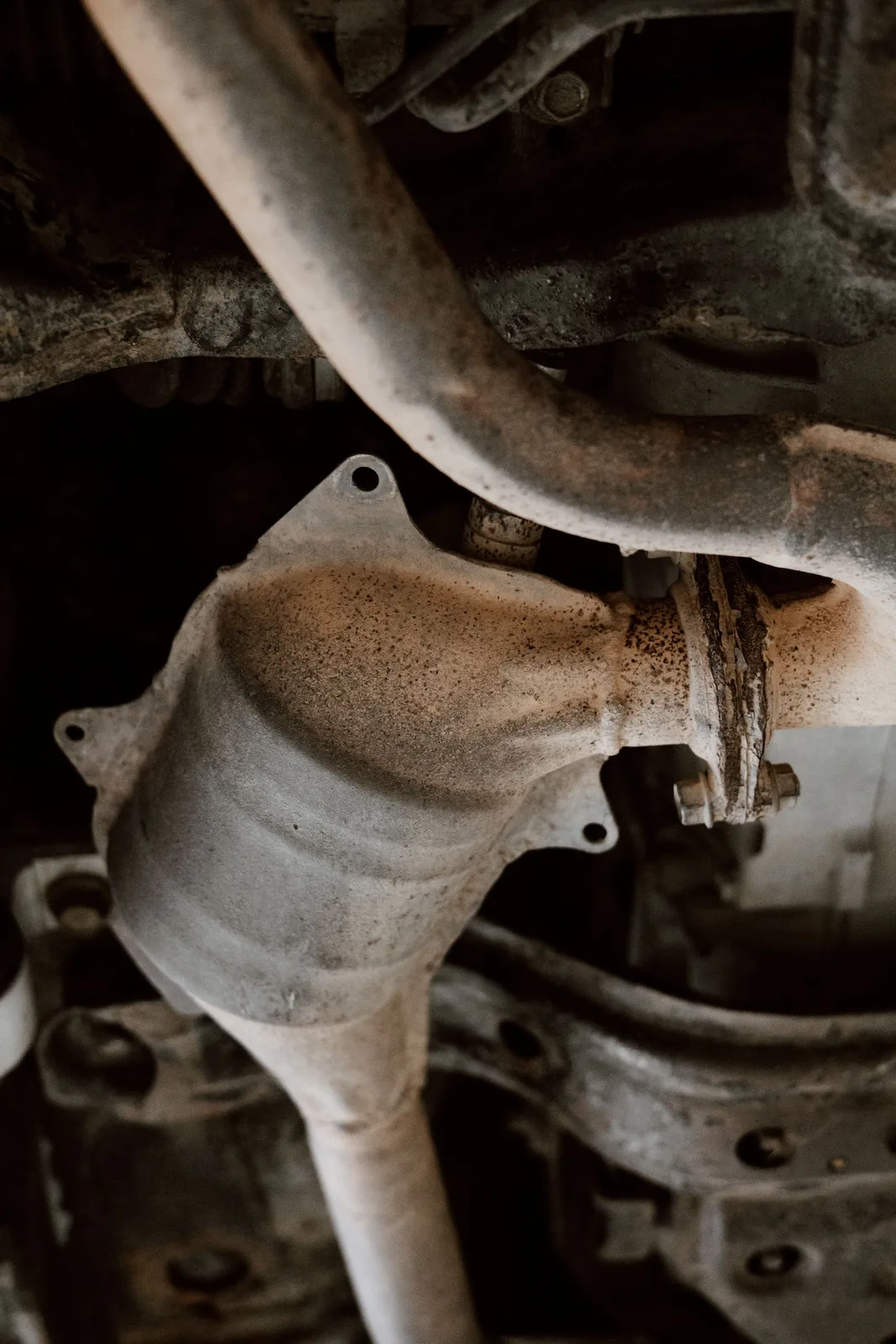
Photograph to come
Diagram: soot burns off in regeneration, ash does not
Signs your filter needs attention
- DPF warning light, or a limp-mode power derate
- Noticeably increased fuel consumption
- Regeneration cycles running constantly or never completing
- Cooling fan running far more than usual
- A hot, acrid smell after driving
- Visible exhaust smoke or a failed PUC test
What a clean actually includes
Nothing here is an optional extra. This is the standard job.
Six steps, received to returned
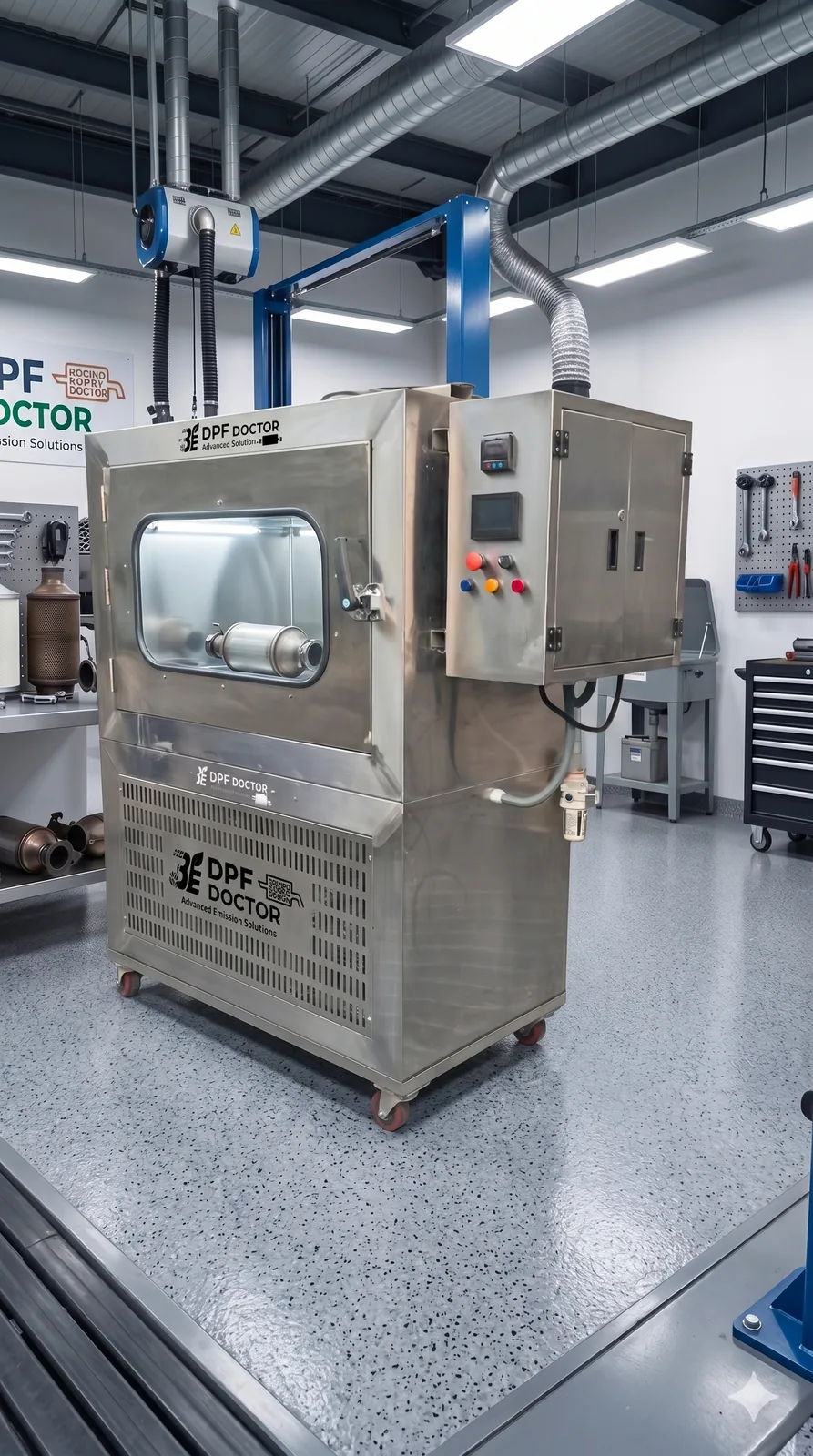
Roughly four to eight hours for a passenger car filter. Every stage is recorded against your job number and issued as a report.
- 1
Filter Received
15 minThe filter is booked in against a job number before anything is touched.
- Filter identified, indexed and weighed on arrival
- Serial number, vehicle it came from and reported symptoms recorded
- Photographic record opened against the job number
- Condition on arrival noted, so any damage is established up front
- 2
Filter Assessment
25 minAn inspection to determine whether cleaning will actually achieve anything.
- Substrate inspected for cracking, melting and channel collapse
- Ash-to-soot ratio assessed to confirm cleaning viability
- A filter too far gone to clean is identified here, not after it is charged
- Go / no-go decision issued before any cleaning begins
- 3
Baseline Measurement
20 minFlow and back pressure measured before cleaning, because without a before there is no after.
- Flow measured on a calibrated bench and recorded against the job
- Back pressure across the filter measured at the same time
- Restriction quantified rather than estimated
- The job cannot be completed later without this reading on file
- 4
Industrial Cleaning Process
2–4 hrsMulti-stage thermal and pneumatic cleaning through the full channel depth.
- Controlled thermal cycle to break down accumulated hydrocarbons
- Reverse-direction pneumatic pulse cleaning through every channel
- Ash extracted from the full substrate depth, not just the inlet face
- Process parameters logged against the job number
- 5
Flow Testing
20 minObjective verification on a calibrated flow bench: the proof the clean worked.
- Post-clean flow measured on the same bench as the baseline
- Result compared directly against the pre-clean reading
- Restoration percentage calculated and recorded
- Filter returned to cleaning if it falls short of target
- 6
Report and Return
15 minA written record of what was measured, what was done, and what to expect.
- Before and after flow and back pressure figures, from your filter
- Photographs of the filter at each stage
- Filter returned for refitting by your own workshop
- Advisory issued on what to check before it goes back on
What changes after a clean
Every clean is recorded on a calibrated flow bench and confirmed on a road test. The readings for your filter are issued with the job report.
up to 99%
Flow restoration
up to 90%
Back pressure drop
Same day
Typical turnaround
What it costs, by brand
These are our rate-card prices for a standard clean, per filter and before GST. No calling for a number: find your vehicle in the table. Plant and industrial filters are quoted after assessment, so their figures are indicative.
| Brand | Models covered | Time in workshop | Price |
|---|---|---|---|
| Hyundai | Creta, Venue, Santa Fe, i20, Verna, Elantra, Tucson, Alcazar | 4–8 hrs | ₹9,000 |
| Kia | Seltos, Sonet, Carens, Syros | 4–8 hrs | ₹9,000 |
| Kia · Carnival | Carnival | 4–8 hrs | ₹15,000 |
| Tata · Cars & SUVs | Altroz, Curvv, Safari, Harrier, Nexon | 4–8 hrs | ₹8,500 |
| Tata · Trucks & buses | Trucks and buses, all models | 6–12 hrs | ₹9,000 |
| Mahindra · SUVs | Thar, Thar Roxx, Scorpio-N, Scorpio Classic, XUV700, XUV 3XO, XUV300, Bolero, Bolero Neo, Bolero Neo Plus, Marazzo | 4–8 hrs | ₹8,500 |
| Mahindra · XUV500 | XUV500 | 4–8 hrs | ₹9,000 |
| Mahindra · Pickups & small commercials | Bolero Pik-Up, Bolero Camper, Veero, Maxx, Supro, Jeeto | 5–8 hrs | ₹8,500 |
| Mahindra · Medium commercials | MCV trucks and buses, all models | 6–12 hrs | ₹7,500 |
| Mahindra · Heavy commercials | HCV trucks and buses, all models | 6–12 hrs | ₹8,500 |
| Ashok Leyland · Dost family | Dost, Dost Strong, Bada Dost, Partner, Saathi | 5–8 hrs | ₹7,500 |
| Ashok Leyland · Trucks & buses | Trucks and buses, all models | 6–12 hrs | ₹10,000 |
| MG Motor | Hector, Hector Plus, Gloster, Majestor | 4–8 hrs | ₹8,500 |
| Toyota | Fortuner, Hilux, Innova Crysta | 4–8 hrs | ₹8,500 |
| Jeep | Compass, Meridian | 4–8 hrs | ₹9,500 |
| Honda | All diesel models | 4–6 hrs | ₹6,500 |
| Eicher | Trucks and buses, all models | 6–12 hrs | ₹9,000 |
| BharatBenz | Trucks and buses, all models | 6–12 hrs | ₹8,500 |
| Force Motors | All models | 5–8 hrs | ₹8,500 |
| SML Isuzu | All models | 5–8 hrs | ₹8,500 |
| Isuzu | All models | 5–8 hrs | ₹8,500 |
| Premium & imported | Mercedes-Benz, BMW, Audi, Volkswagen and other imports | 4–8 hrs | ₹15,000 |
| Construction Equipment | Excavators, loaders, dozers, cranes and compactors | 8–16 hrs | From ₹19,500indicative |
| Agricultural Machinery | Tractors, harvesters and agricultural prime movers | 6–12 hrs | From ₹15,000indicative |
| Marine Diesel | Auxiliary generators and propulsion units | 8–24 hrs | From ₹24,000indicative |
| Diesel Generator Set | Standby and prime-power generator sets | 6–12 hrs | From ₹16,000indicative |
Fleet rates apply above three vehicles. GST additional.
Replacement should be the last resort, not the first quote
A new filter commonly costs between ₹80,000 and ₹4,00,000 depending on platform. Cleaning typically runs between 5% and 15% of that, and in the overwhelming majority of cases produces the same result.
When cleaning is the right answer
The substrate is structurally sound and the restriction is soot or ash loading. This describes the large majority of filters we see, including many written off as scrap elsewhere.
When replacement is genuinely necessary
The substrate is physically damaged: cracked, melted or with collapsed channels. Cleaning cannot repair structural damage, and we will tell you so rather than take the job.
What we will not do
We do not offer DPF removal, deletion, or ECU remapping to bypass an emission system: on any vehicle, under any circumstances.
It is illegal under the Central Motor Vehicles Rules, it fails a Pollution Under Control test, and it invalidates both your insurance and your manufacturer warranty. Anyone offering it is selling you a liability.
Cleaning restores the filter to working condition and keeps the vehicle fully compliant. It is the legal answer and, almost always, the cheaper one.
Included with every clean
- Before-and-after flow bench report
- Photographic record of the filter at each stage
- Root-cause findings and preventive recommendations
- 12-month written warranty on flow restoration
Cleaning the filter is one part of the job
A diesel particulate filter is the end of a long chain. It collects what the engine ahead of it produces, so a filter that blocked once will block again if whatever caused it is still on the vehicle. Cleaning gives you a filter back at measured flow. It does not change the conditions that filled it.
What we do, and what we do not
- Clean the filter you bring or send to us
- Measure flow and back pressure before and after, on a calibrated bench
- Issue a report with both readings against your job number
- Remove the filter from your vehicle
- Refit it once it is cleaned
- Inspect, diagnose or road test the vehicle
If you need the filter removed and refitted, ask us and we can suggest a workshop that does that work. The choice of workshop is yours, and we do not supervise or warrant their work.
Before the cleaned filter goes back on, we recommend your workshop inspects these and attends to anything it finds. This is a recommendation rather than a checklist of ours: we work on the filter, not the vehicle, so we are not in a position to inspect any of it.
EGR Valve
Recirculates exhaust gas back into the intake. When it sticks open, combustion runs dirtier and the filter loads faster than it can clear.
Intake & Exhaust Manifolds
Carbon build-up and leaks change how much air reaches the cylinders and how freely exhaust leaves them. Both affect how the filter loads.
Intercooler
Cools the compressed intake charge. Oil carried into it from a worn turbo ends up burning, and what burns downstream reaches the filter.
Turbocharger Hoses
A split hose or a loose clamp loses boost. The engine gets less air than the ECU believes it has, and the mixture runs rich.
MAP Sensor
Tells the engine management system what the manifold pressure actually is. A drifting sensor produces fuelling based on a number that is wrong.
Air Cleaner / Air Filter
The cheapest item on this list and the most often overlooked. A restricted filter starves the engine of air, and soot output rises.
DM-CUST-ADV-001
Commonly carried out alongside
Cleaning the filter without resolving what blocked it simply resets the clock. These pages explain the work that addresses the cause, and who carries it out.
DPF cleaning, answered
Including the answers that occasionally talk people out of a service they do not need.
A Diesel Particulate Filter is a honeycomb ceramic substrate fitted in the exhaust system that traps soot particles before they leave the tailpipe. It is mandatory on BS-IV and BS-VI vehicles in India. The filter is designed to periodically burn off trapped soot in a process called regeneration, but it cannot burn off ash, which accumulates permanently over the filter's life and eventually requires physical cleaning.
Two different things accumulate. Soot is combustible and is removed by regeneration. Ash, from engine oil additives and normal wear, is not combustible and builds up permanently. A filter blocks when either regeneration stops working (so soot accumulates faster than it clears) or when ash has simply filled the substrate over years of service. Short urban trips, excessive idling, faulty injectors, a failing turbocharger, EGR problems and low-quality fuel all accelerate the process.
Regeneration needs sustained high exhaust temperature, which typically means extended running at speed. The most common causes of failure are short journeys that never reach temperature, repeatedly interrupted cycles from switching the engine off mid-regeneration, a faulty differential pressure or exhaust temperature sensor reporting incorrect values, injector problems, EGR faults, low fuel level (many vehicles inhibit regeneration below a quarter tank) and an already ash-saturated filter that has passed the point where regeneration can help.
The DPF warning light is the obvious one, but it usually appears late. Earlier signs include noticeable loss of power or a limp-mode derate, increased fuel consumption, a cooling fan running more than usual, frequent or continuous regeneration attempts, a strong hot or acrid smell after driving, difficulty starting, and visible smoke from the exhaust. If you are seeing several of these together, the filter needs assessment before it reaches the point where regeneration can no longer help.
Passenger cars and SUVs typically start from ₹8,500, light commercial vehicles from ₹12,000, and heavy commercial or off-highway equipment from ₹18,000 depending on filter size and condition. The exact figure depends on the vehicle, the degree of ash loading and whether any upstream faults need correcting. For context, a replacement DPF commonly costs between ₹80,000 and ₹4,00,000: cleaning is usually a small fraction of that. Use our quote calculator for an instant estimate, or send vehicle details for a firm quotation.
Substantially. Cleaning typically costs between 5% and 15% of a replacement filter. Replacement is genuinely necessary only where the substrate is physically damaged, cracked, melted or collapsed, which is a small minority of the filters we see. Our diagnostic pass establishes which case applies before you commit to anything, and we will tell you plainly if a filter is not worth cleaning.
Most passenger car and light commercial filters are completed within a single working day, typically four to eight hours from the filter reaching us to it being ready for collection. Heavy commercial and off-highway filters may take longer depending on size. Note that we clean the filter itself: it comes to us already removed, and goes back to your own workshop to be refitted. Fleet customers on contract can use our loan filter pool, so a cleaned filter is available to go on as yours comes off, which keeps the vehicle earning while its own filter is here.
Yes, where the performance loss was caused by exhaust restriction, which it usually is. A blocked filter raises back pressure, which directly reduces power and increases fuel consumption. Our flow bench testing regularly shows restoration to within 95–99% of original flow, and the corresponding recovery in power, throttle response and fuel economy is immediate and measurable. What cleaning cannot fix is a performance problem with a different root cause, which is precisely why we diagnose before we clean.
No. Removing or disabling a diesel particulate filter on a road-going vehicle is illegal under the Central Motor Vehicles Rules, will fail a Pollution Under Control test, and invalidates your insurance and manufacturer warranty. We do not offer DPF deletion or ECU remapping to bypass emission systems under any circumstances. Cleaning restores the filter to working condition and keeps the vehicle fully compliant, which is both the legal answer and, in almost every case, the cheaper one.
Where our Nashik workshop reaches
One workshop, in Nashik. These are the towns whose vehicles and filters regularly come to it, with the road distance on each so you can judge the trip before making it.
Send us the vehicle and the symptoms
We will tell you whether cleaning will fix it, what it will cost, and how long the vehicle will be with us, before you commit to anything.